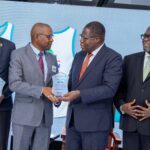
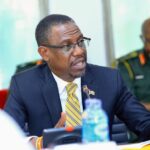
President Yoweri Kaguta Museveni yesterday met with opposition leaders from Acholi, with both sides agreeing to put aside political differences and work together to tackle poverty and drive socio-economic transformation in the sub-region.
The meeting marked a turning point, as the Members of Parliament representing different political affiliations expressed their commitment to collaborating with the government for the betterment of Acholi.
During the meeting at State House, Entebbe, President Museveni reflected on Uganda’s historical challenges, emphasizing that unity and a shared vision are essential for sustainable development.
President Museveni also traced the roots of the country’s political instability back to 1961, which is not the case currently, under the NRM government.
He pointed out that the first mistake was made by the Uganda People’s Congress (UPC) when it misled the Buganda Kingdom leadership by making promises that fuelled tribal politics instead of promoting national unity.
“The difference between Uganda and Tanzania is that Tanzania started its politics with unity, while Uganda’s politics began with division. In 1961, UPC misled Mengo by promising them federalism, rather than pushing for a united Uganda,” President Museveni said.
He noted that the collapse of the alliance between UPC and Kabaka Yekka in 1966 further deepened divisions, ultimately weakening the army and allowing instability to fester.
President Museveni also dismissed claims that his past ties with Acholi fighters meant the region should have automatically developed, explaining that sectarianism undermined those efforts.
“In 1976, I trained young men including some from Acholi in Mozambique. But when we captured Kampala in 1979, some UPC supporters told them, ‘Why are you working with this Munyankore?’ and they abandoned us. That’s how bad policies and sectarianism worked against national unity,” he explained.
The President thus emphasized the importance of unity over revenge, recalling how the collapse of Idi Amin’s regime in 1979 led to unfair targeting of West Nile people, forcing over half a million of them into exile in Congo and South Sudan.
“The focus should therefore have been on reconciliation, not revenge.”
Turning to development, President Museveni reiterated his government’s focus on addressing poverty through the Parish Development Model (PDM) but acknowledged the challenge of funding big parishes.
“A parish with 20,000 households cannot be transformed with just Shs 100 million. We must rethink how we support these parishes according to their different numbers,” he noted.