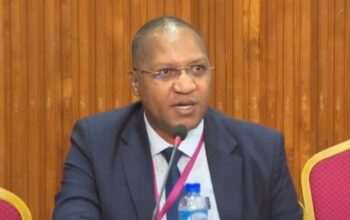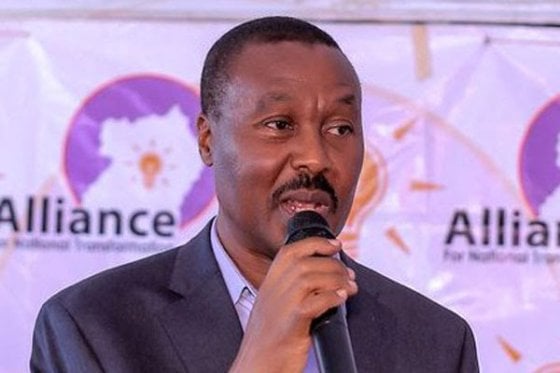
Former presidential candidate Maj Gen (Rtd) Mugisha Muntu has said he does not have sufficient evidence to legally challenge President Yoweri Museveni’s re-election, effectively ruling out a court petition against the declared election results.
Speaking in a post-election interview, Muntu said that while he raised concerns during the electoral process, a successful legal challenge requires credible, verifiable evidence that meets the threshold set by the courts.
“Elections are contested through evidence, not suspicion or public sentiment,” Muntu said, adding that without concrete proof, pursuing a court case would be irresponsible and unlikely to succeed.
His remarks come amid heightened public debate over electoral transparency and the responsibility of opposition leaders to seek redress through lawful mechanisms. Some critics have questioned why opposition candidates often stop short of filing petitions after disputed elections, while others argue that structural challenges make it difficult to gather admissible evidence.
Muntu acknowledged that Uganda’s electoral environment presents obstacles but maintained that legal action must be grounded in facts that can withstand judicial scrutiny.
“You may observe irregularities or raise concerns politically, but courts require specific, documented proof. At this point, I do not have that,” he said.
The former army commander and leader of the Alliance for National Transformation (ANT) has previously positioned himself as an advocate of institutional reform and constitutionalism, often emphasizing long-term democratic building over confrontational politics.
President Museveni was declared winner of the election by the Electoral Commission, extending his long rule. Several opposition figures have criticized the process, citing alleged irregularities, intimidation and uneven access to the media.
Muntu’s decision not to challenge the results underscores a broader debate within the opposition over strategy, accountability and the effectiveness of legal avenues in addressing electoral disputes.