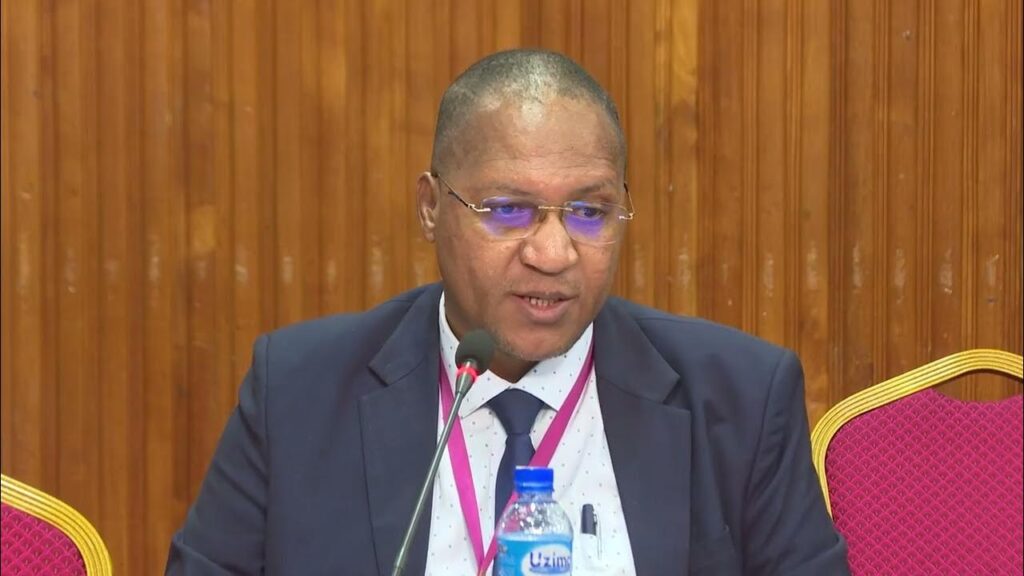
Former Ministry of Works and Transport Principal Road Safety Officer Ronald Amanyire, who has in recent months portrayed himself as a fearless crusader against corruption in government, is facing uncomfortable questions over his own conduct after an old Inspectorate of Government (IGG) investigation resurfaced, exposing a breach of public service regulations that once earned him a recommendation for disciplinary action.
The October 2018 investigation raises fresh questions about the former official’s conduct, particularly his involvement in government vehicle inspection contracts and a controversial trip to South Africa in November 2016.
Amanyire, who has built a public profile through social media attacks against government officials and institutions, now finds his own public service record attracting scrutiny.
According to the IGG investigation, Amanyire was a member of the Contract Management Team overseeing the government’s mandatory motor vehicle inspection services contract with Société Générale de Surveillance (SGS).
Investigators questioned his November 2016 trip to South Africa after he received an invitation from Workshop Electronics (Pty) Ltd, a company associated with equipment used in the vehicle inspection project.
The invitation, dated November 2, 2016, reportedly offered to meet his travel, accommodation and meal expenses while visiting the company’s factory.
Amanyire admitted travelling to South Africa but told investigators that the journey was private and intended for fertility treatment. He denied visiting the company’s factory, maintaining that he had only used the invitation letter to facilitate his visa application.
However, the IGG established that he travelled without obtaining permission from the Ministry’s Accounting Officer or informing his supervisors.
Given his position on the team responsible for overseeing the government contract, the circumstances surrounding the invitation raised potential conflict-of-interest concerns.
The Inspectorate consequently found that Amanyire had breached the Uganda Public Service Standing Orders of 2010, which require public officers to obtain permission before travelling abroad.
In a recommendation that could complicate his self-proclaimed image as an uncompromising accountability campaigner, the IGG directed that the Permanent Secretary submit him to the Public Service Commission for disciplinary action.
The findings are particularly awkward for a man who has spent months questioning the integrity, professionalism and accountability of other public officials.
THE WHISTLEBLOWER UNDER SCRUTINY
Amanyire’s renewed public profile follows his April 2026 interdiction by the Ministry of Works and Transport, an action that came amid escalating confrontations with ministry officials over his social media activities.
According to the interdiction communication reported by Uganda Radio Network, the ministry accused him of publishing internal government documents without authorisation, failing to submit a performance plan, neglecting assigned duties and refusing to attend departmental meetings.
The ministry also raised concerns about his criticism of government programmes, including the Intelligent Traffic Monitoring System and the Rationalisation of Government Agencies and Public Expenditure reforms.
Amanyire, however, rejected the characterisation of his actions, presenting himself as a victim of a system uncomfortable with internal criticism and accountability.
He has maintained that his interventions are motivated by the need to expose corruption and protect public resources.
But the resurfacing of the 2018 IGG findings adds another layer to the controversy, particularly because the investigation predates his current online activism by several years.
It raises questions about whether the former official has been equally willing to subject his own conduct to the standards of accountability he demands from others.
QUESTIONS THAT REFUSE TO GO AWAY
The old IGG report is not, however, a finding that Amanyire was corrupt. It established a breach of public service travel regulations and recommended disciplinary action, but did not conclude that he had engaged in corruption in managing the SGS contract.
Neither does the recommendation, on its own, establish whether disciplinary proceedings were subsequently concluded or what action, if any, was taken.
Nevertheless, the findings leave important questions about professional conduct, potential conflicts of interest and the standards expected of public officers.
For a former government official who has made accountability his central public message, the scrutiny presents an uncomfortable test: whether transparency and integrity should apply only to the officials he criticises or equally to his own record.
As the controversy unfolds, the public deserves answers from both Amanyire and the relevant authorities on the outcome of the IGG recommendations and the circumstances surrounding his departure from public service.