He is friendly, jolly and welcoming to everyone who comes his way. These are the words that can best describe Pat Robert Larubi , a seasoned Ugandan investigative freelance journalist with a bias in health.
Larubi says his love for health and human rights stories saw him think of doing something different for people he felt were always neglected but also marginalized- the people with albinism.
“During one of my expeditions in investigative journalism, I unearthed something which will never go off my mind. It was a story of John, a 40 year old man in Kayunga district who was murdered by unknown people for refusing to sell to them his albino daughter,”Larubi says.
“On the fateful day after many attempts to ask John sell her daughter, the 40 year old man was lured to a nearby drinking joint from where he was later killed. When the police sniffer dogs were brought, they led detectives to one of the shops where a bucket of blood was recovered. Another man was arrested who confessed that he was with a group of other who killed John for refusal to sell them his albino daughter. The man said since John could not give them his daughter, they should kill him and suck his blood because it was similar to his daughter’s.”
Larubi says he realized something was amiss and he had to amplify the voice of the albinos whose existence he says was being threatened.

He adds that he took on a solo journey to amplify voices of persons with albinism across Uganda and East Africa using the power of the new media to break all myths and misconceptions surrounding issues related with albinism.
“I realized there was lot of negative portrayal on the subject of albinism and I thought it would be wise to cutting on the noise of negativity by telling the world what they really needed to know and how they can take action to make this world a better place for all, including persons with albinism,” he adds.
He says that using his journalism skills, he continued doing stories to advocate for persons with albinism.
Larubi also formed Pats Journal, a media and human rights Non-governmental organization working towards inclusion, ending stigma and discrimination faced by persons with albinism.
Covid
When the Coronavirus pandemic broke out last year, persons with albinism were among those who suffered most, according to Larubi.
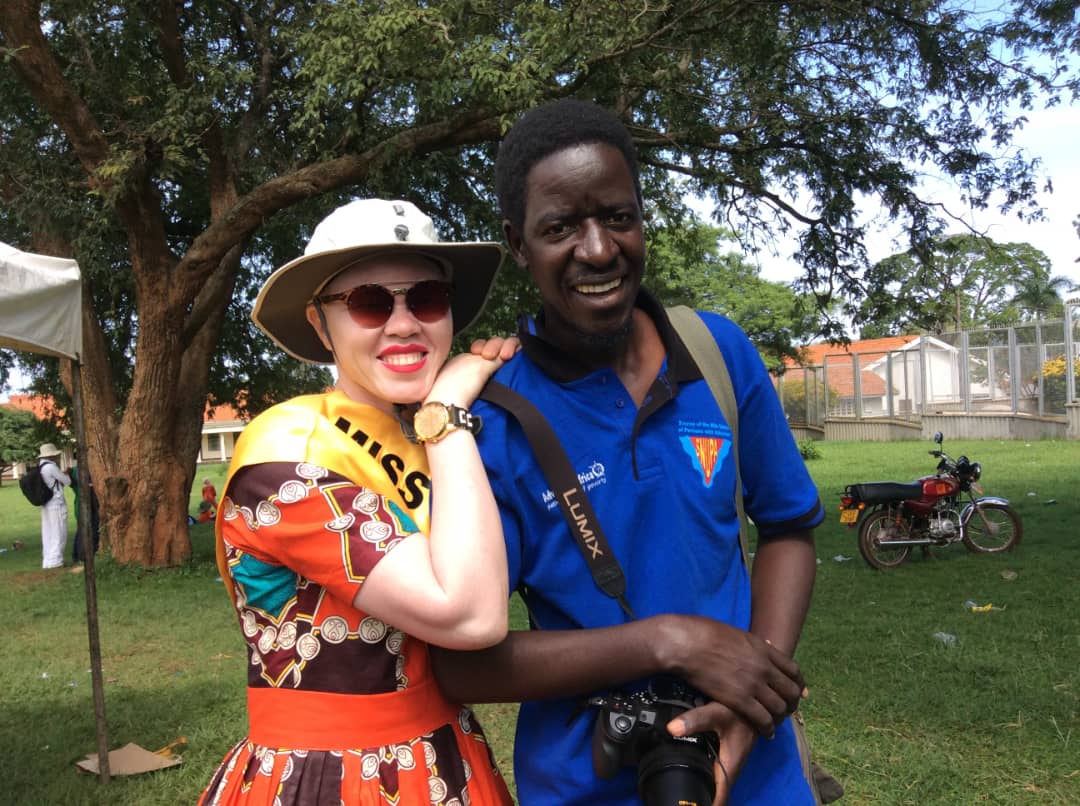
“Whereas other people cried for food during the lockdown, the albinos cried for sunscreens because they are needed to aid their survival. The pandemic and its effects like the lockdown had come with a number of other effects including the ban on public transport which meant our people could not move nor access the much needed sunscreens,” he says.
He explains that because of lack of pigmentation, people with albinism develop sores on their skins that in turn develop into skin cancer , a situation he says can be saved by providing sunscreens to people.
According to Larubi, using a motorbike, he embarked on a journey to traverse the entire country to provide protective sunscreens to over 200 persons with albinism.
He says he is happy that he was able to achieve his mission of reaching all the targeted people.
Achievements
Larubi says that the few years he has spent advocating for the rights of persons with albinism have not been a waste, since he has something to show out of it.
“Today, the perception of Ugandans on albinism is slowly by slowly changing. People no longer treat persons with albinism the way they used to. Incidents of attack, kidnap for ritual murder, mutilation, stigma and outright discrimination of persons with albinism has reduced. The persons with albinism also feel a sense of belonging ,”Larubi says.
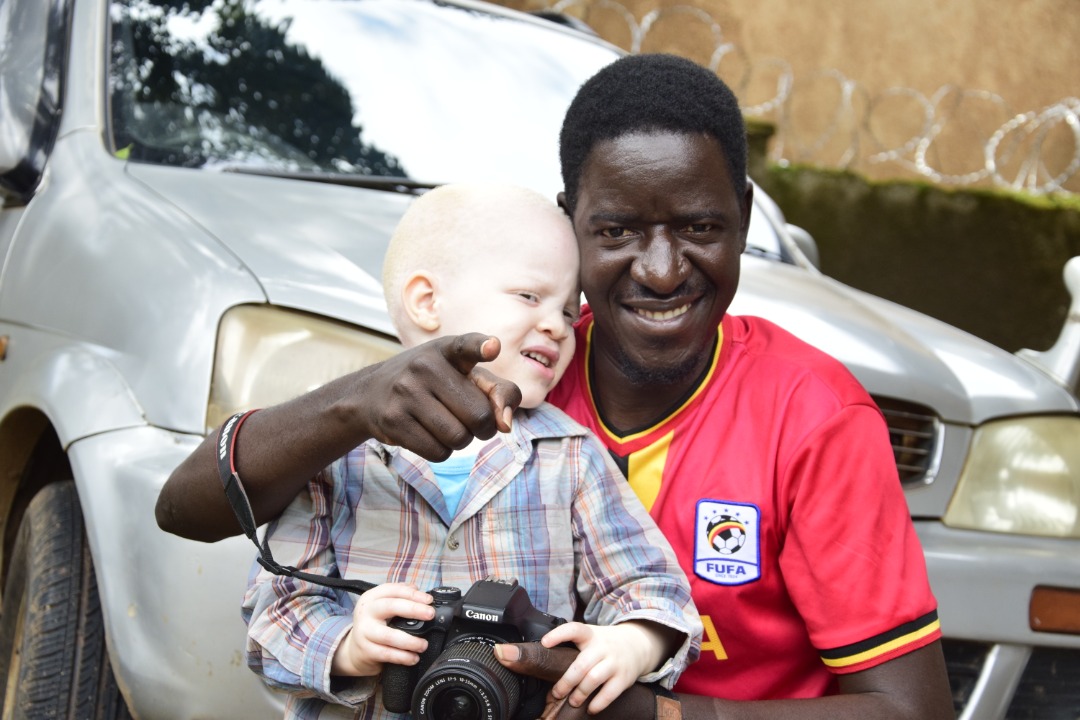
According to Larubi, also known to close friends as “the black Albino”, there is an increased level of publicity and media attention towards the plight of the people with albinism.
He says this is a move in the right direction.
Not yet uhuru
Larubi says despite some strides made in fighting for rights of the persons with albinism, a lot has not yet been done.
He says that even when global actions are being taken by numerous entities to address the plight of the less privileged people, the issues of sexual reproductive health and rights of women with albinism are left out, despite documented incidences of rape of the victims by men who want to prove the sexual orientation.
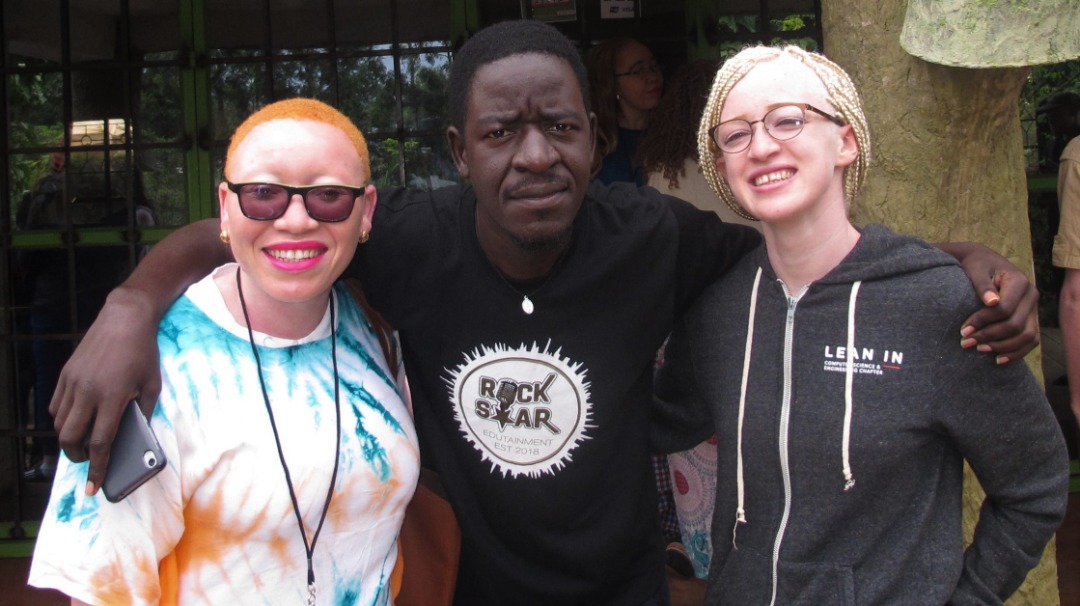
“When you seat in a forum and listen to people’s stories and challenges you realize there is still an aspect of stigma and right violation of persons with albinism. This needs to end, not only in Uganda but all over the world,” he adds.
Clarion call
“Ultimately my goal is to see that one day all people with albinism are free from all forms of socio- economic and political injustice. This will however require more than individual efforts but a collective move involving influencers, policy makers and sponsors to help fund local campaigns in a bid to facilitate the access to accurate and authoritative information about albinism while countering ignorance,”Larubi says.